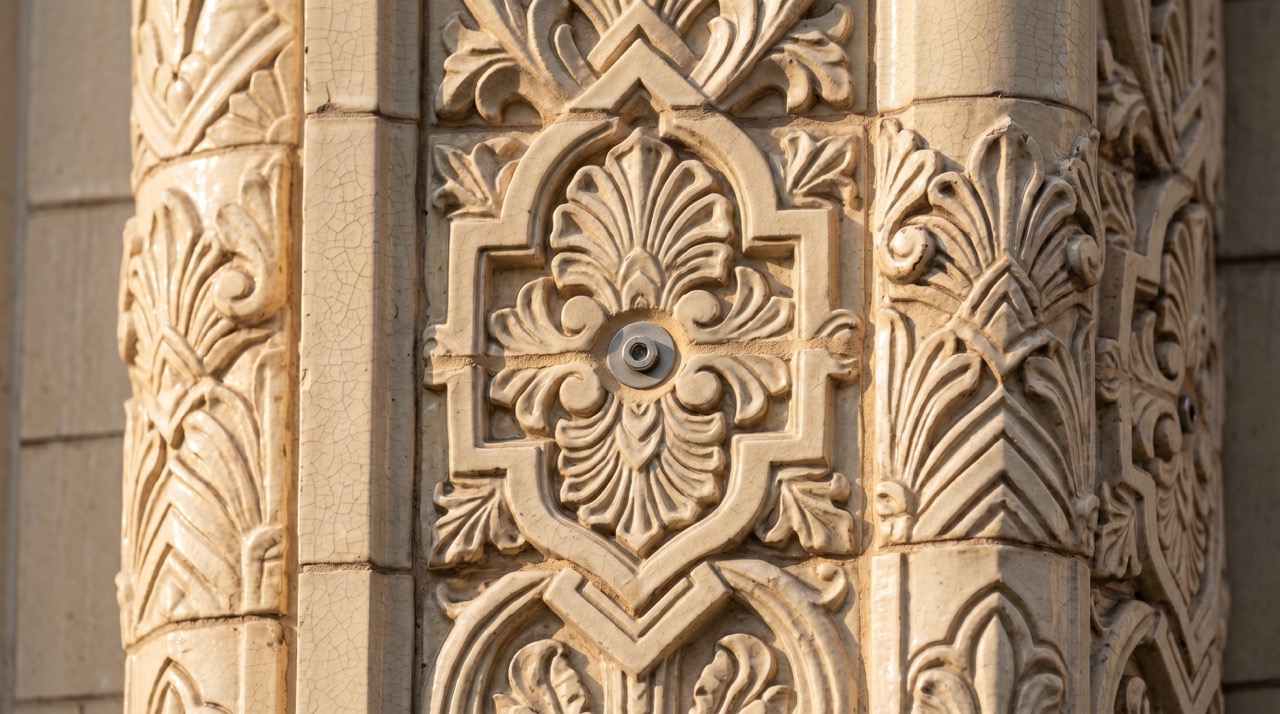
Terra Cotta Repair
Terra cotta is one of New York City’s most distinctive architectural materials — and one of its most challenging to repair. From the elaborate glazed tiles on early 20th century Midtown skyscrapers to the ornate cornice bands on pre-war apartment buildings throughout Manhattan, Brooklyn, and the Bronx, terra cotta defines the visual character of the city’s historic building stock. When terra cotta fails, the risks are real: hollow units at any height present a serious falling hazard and generate FISP Unsafe designations. LL11 Facade Repairs Contractor NYC specializes in terra cotta repair and replacement services for NYC buildings.
Understanding Terra Cotta Failure on NYC Buildings
Terra cotta is a fired clay product — highly durable when sound, but vulnerable to specific failure mechanisms:
Hollow units — Over decades, the mortar bond between the terra cotta unit and the backup masonry deteriorates. Units become “hollow” — they sound empty when tapped — and may be held in place only by weathered mortar or adjacent units. Hollow terra cotta at any height is an UNSAFE condition under FISP.
Glazed surface cracking — The glaze on glazed terra cotta expands and contracts at a different rate than the ceramic body beneath. Over time, this differential movement produces crazing (fine surface cracks) and eventually glaze delamination. Crazing itself is not structurally significant, but it allows water to penetrate the ceramic body, accelerating freeze-thaw deterioration.
Through-body cracking — Cracks that penetrate through the terra cotta unit indicate structural failure or severe thermal/freeze-thaw stress. Through-cracked units must typically be replaced.
Missing sections — Where units have been removed or fallen, the cavity is exposed to water infiltration, and adjacent units may shift without their lateral support.
Joint mortar deterioration — Like all masonry, terra cotta is only as sound as the mortar joints holding the units in place. Failed joints allow water infiltration behind the units, accelerating hollow formation and backing deterioration.
Terra Cotta Repair and Restoration Services
Close-Up Survey and Condition Mapping
A thorough terra cotta assessment requires close-up access to every unit. Sound testing (tapping) identifies hollow units that visual inspection from the street misses entirely. We map all hollow, cracked, displaced, and missing units on elevation drawings, creating a condition plan that becomes the basis for repair scope and FISP documentation.
Stainless Steel Tie-Back Anchor Systems
For terra cotta units that are hollow but structurally intact — no through cracks, sound glaze, sound body — tie-back anchoring is often the preferred repair approach. We install stainless steel anchors that connect the terra cotta unit mechanically to the backup masonry, restoring the secure connection without removing and replacing the original material.
Tie-back systems are minimally invasive, preserve original terra cotta, and are appropriate for buildings under Landmarks Preservation Commission review where removal of original material requires justification.
Terra Cotta Unit Replacement
When units are cracked, actively deteriorating, or missing, replacement is required. The process involves:
- Carefully removing the failed unit to avoid damaging adjacent units
- Cleaning the cavity and evaluating the backup masonry condition
- Sourcing or fabricating a replacement unit matched to the original in profile, size, and glaze color
- Installing the replacement unit with stainless steel anchors and Type S lime mortar matched to original
Replacement sourcing — We work with specialty terra cotta manufacturers who can produce custom units for historic profiles. For common early 20th century profiles, stock units are often available. For rare or highly ornate profiles, custom fabrication from drawings is required.
GFRC substitutes — Where period-appropriate terra cotta replacements cannot be sourced or fabricated economically, glass-fiber-reinforced concrete (GFRC) units custom-cast to the original profile and painted to match are an accepted alternative for non-landmark buildings.
Mortar Joint Repointing
After any hollow or failed units are addressed, the surrounding mortar joints are repointed with mortar compatible with the original — typically a lime-rich Type O or Type N mortar appropriate for the compressive strength of the ceramic body and the original joint width.
Architectural Terra Cotta Restoration
For buildings with extensive terra cotta ornament requiring systematic evaluation and repair, we provide comprehensive restoration programs: full close-up surveys, phased repair priorities (UNSAFE conditions first, then SWARMP, then preventive stabilization), material sourcing, and multi-season repair scheduling coordinated with scaffold access.
Why Terra Cotta Repair Requires Specialist Contractors
Terra cotta repair is not a general masonry trade. The specific failure mechanisms, the sourcing challenges for replacement materials, the structural implications of hollow and displaced units, and the Landmarks Preservation Commission approval process for designated buildings all require specific expertise.
General masonry contractors who encounter terra cotta often resort to caulking hollow units in place — a temporary measure that delays proper repair and typically fails within a few years. We repair terra cotta properly: anchored, matched, and documented for FISP compliance.
Service Areas for Terra Cotta Repair
We work on terra cotta buildings throughout New York City. The heaviest concentrations of terra cotta in NYC are in Manhattan (Midtown, Upper West Side, Upper East Side, Harlem), Brooklyn (Flatbush, Crown Heights, Park Slope, Downtown Brooklyn), and the Bronx (Grand Concourse, Fordham).
Request a Free Quote
Terra cotta repair scope depends heavily on the number and severity of deficiencies, the building’s ornamental complexity, and material sourcing requirements. Contact LL11 Facade Repairs Contractor NYC for a site assessment and quote.
Call (917) 540-6852 or use the contact form below.
Frequently Asked Questions — Terra Cotta Repair NYC
How can I tell if my building’s terra cotta is failing? From the street, look for: missing units (visible voids in the facade), displaced units that have moved out of plane, visible cracks through terra cotta sections, rust staining below metal anchors, and deteriorated mortar joints in terra cotta bands. Close-up inspection by a QEWI is required to identify hollow units, which are not visible from the street.
Is all hollow terra cotta dangerous? Hollow terra cotta at height presents a falling risk if the unit becomes fully detached. Under FISP, hollow terra cotta that cannot be demonstrated to be secure is classified as UNSAFE. We assess the structural implications case by case — some hollow units are adequately restrained by adjacent units or embedded anchors; others present immediate hazard.
Can terra cotta be repaired without replacing it? In many cases, yes. Hollow units that are otherwise sound can be secured with stainless steel tie-back anchors without removal. This is the preferred approach where preservation of original material is a priority, particularly on LPC-designated buildings. Replacement is required only for cracked, missing, or structurally failed units.
What if replacement terra cotta units are not available? For common early 20th century profiles, period-appropriate replacements are often available from specialty manufacturers. For rare or custom profiles, fabrication from shop drawings is required — this adds to lead time and cost. GFRC substitutes are an option for non-landmark buildings when period terra cotta cannot be obtained.
How long does terra cotta repair take? A focused repair addressing specific FISP-cited deficiencies on a mid-rise building typically takes 4–8 weeks from mobilization, depending on unit count and whether custom replacement units need to be fabricated. Comprehensive ornamental restoration programs on large buildings may span multiple seasons.