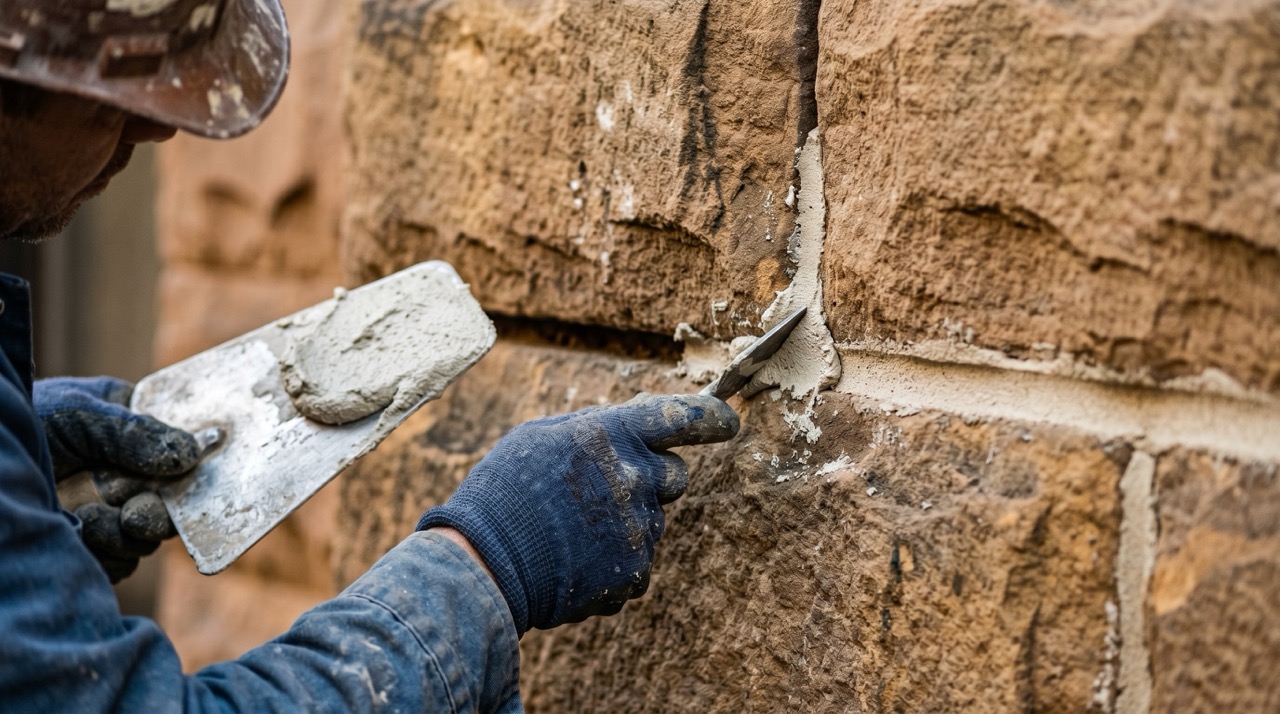
Masonry Repair
Masonry is the material that defines New York City’s built environment — brick, brownstone, limestone, terra cotta, bluestone, and mortar holding it all together. When masonry deteriorates, it’s not just an aesthetic problem. Loose brick, failed mortar, spalling stone, and displaced terra cotta create falling hazards, FISP violations, and interior water damage that compounds over time. LL11 Facade Repairs Contractor NYC provides expert masonry repair services for NYC buildings of all types, from pre-war walkups to large multi-building residential complexes.
Masonry Repair Services for NYC Buildings
Brick Masonry Repair and Repointing
Brick is everywhere in NYC — Flemish bond on pre-Civil War brownstones, running bond on early 20th century tenements, elaborate polychrome brickwork on Queen Anne and Romanesque revival buildings. When mortar joints fail, water enters the wall, freeze-thaw cycles widen the damage, and brick units begin to spall.
Repointing is the process of removing deteriorated mortar to depth and replacing it with fresh mortar. Sound repointing work requires:
- Cutting joints to a minimum depth of 3/4 inch (2-inch depth is preferable for exposure to NYC weather) without damaging the brick faces
- Selecting mortar type appropriate to the existing brick’s hardness — softer, lime-rich mortars for pre-1920 brick; slightly stronger types for mid-century construction
- Matching the joint profile (flush, tooled, struck, etc.) to the original
- Applying mortar in lifts and properly curing the work
A common repointing mistake is using Type S or Type N Portland-cement mortar on old soft brick. Modern hard mortars are stronger than the brick they’re bonding — when thermal movement occurs, the brick spalls instead of the mortar cracking. We size our mortar to the specific brick.
Brick Replacement
When individual brick units are fractured, spalled beyond the face, or structurally failed, they must be replaced. We source replacement brick matched to the existing course dimensions, color, and surface texture as closely as possible. For historic and landmark-designated buildings, we source period-appropriate brick from salvage yards and specialty suppliers.
Brownstone and Limestone Repair
Manhattan’s brownstone-fronted townhouses and the limestone facades on pre-war apartment buildings along the Upper West Side, Riverside Drive, and similar corridors are subject to particular deterioration mechanisms: surface sugaring (where limestone loses its binder and crumbles), horizontal joint opening under lintel movement, and deterioration of carved detail at cornices and window surrounds.
We repair brownstone and limestone using mineral-based consolidants for friable surfaces, compatible repair mortars matched to the stone’s properties, and carved replacement elements where detail is beyond repair. This is precision work — not patch-and-paint.
Terra Cotta Restoration
New York City’s terra cotta heritage is extraordinary — from the glazed tile facades of Midtown commercial buildings to the elaborate terra cotta ornament on early 20th century apartment houses in Washington Heights and the Bronx. When terra cotta fails, the consequences range from staining and efflorescence to hollow and displaced units that present serious falling hazards.
Our terra cotta repair process:
- Close-up survey to identify all hollow, cracked, or displaced units
- Removal of structurally failed units with documentation of original positions
- Fabrication or sourcing of replacement units matched to original glaze color and profile
- Installation with stainless steel mechanical anchors and mortar bed matched to original
- Stainless steel tie-back systems for hollow units that are structurally sound but have lost their original mortar bond
Mortar Joint Cleaning and Waterproofing
Beyond repointing, masonry surfaces benefit from cleaning to remove decades of biological growth, atmospheric staining, and inappropriate prior coatings. We use appropriate cleaning methods — low-pressure water washing, chemical treatment where appropriate, controlled mechanical methods for stubborn staining — that clean without damaging the masonry surface.
After cleaning and repointing, we apply penetrating silane or siloxane water repellents where appropriate. These treatments reduce surface water absorption without forming a surface film that can trap moisture. We do not apply surface coatings or elastomeric paint to historic masonry.
Coping, Cornice, and Parapet Masonry Repair
The top of the wall is where masonry takes its hardest beating — exposed to rain, wind, freeze-thaw, and gravity. Stone copings, brick parapets, and ornamental cornices all deteriorate faster than the wall below. We repair deteriorated copings, reset displaced coping stones, replace failed coping joints, and rebuild deteriorated parapet sections with proper through-wall flashing.
Masonry Repair Contractors NYC: What Sets Our Work Apart
We specialize in historic materials. Most of what’s wrong with NYC masonry was built before 1940 using materials and methods that require specific expertise. We understand the difference between pre-war soft brick and modern modular brick, between natural hydraulic lime mortar and Type S Portland, between genuine brownstone and cast stone.
We don’t cover problems — we fix them. Filling cracks with caulk without addressing the cause, applying elastomeric coatings over failing masonry, repointing with incompatible mortar — these are common short-term approaches that delay and amplify problems. We identify root causes and repair them properly.
FISP documentation. Every masonry repair we complete is documented with photographs and material specifications suitable for QEWI re-inspection and DOB FISP filing.
Service Areas for Masonry Repair
We provide masonry repair services throughout New York City: Manhattan (including all pre-war neighborhoods — Upper West Side, Upper East Side, Harlem, Washington Heights, Inwood, and Downtown), Brooklyn (Park Slope, Prospect Heights, Crown Heights, Williamsburg, Greenpoint, Bay Ridge, Flatbush), Queens (Astoria, Long Island City, Jackson Heights, Flushing), the Bronx (Riverdale, Fordham, Grand Concourse, Mott Haven), and Staten Island.
Request a Free Quote
Masonry repair scope and access requirements vary significantly by building. Contact LL11 Facade Repairs Contractor NYC for a site assessment and project-specific quote.
Call (917) 540-6852 or use the contact form below.
Frequently Asked Questions — Masonry Repair NYC
What is the most common masonry problem on NYC buildings? Mortar joint deterioration is by far the most common deficiency on New York City’s pre-war brick buildings. Failed mortar allows water infiltration that accelerates all other forms of facade deterioration — brick spalling, lintel corrosion, interior water damage. Timely repointing is the most cost-effective maintenance investment for most brick buildings.
How do I know if my building needs masonry repointing? Signs include: visible gaps or voids in mortar joints, mortar that crumbles or can be raked out easily with a key, white efflorescence (salt staining) on the brick face, water staining on interior walls near the facade, and diagonal cracking above window openings. A FISP inspection will identify all deficiencies formally.
What type of mortar should be used on a pre-war NYC building? Pre-war brick buildings typically require a Type O or Type N mortar with a significant lime content — softer than the brick to allow thermal movement to be accommodated in the mortar joint rather than the brick face. Using modern Type S high-Portland mortar on old soft brick will cause brick spalling. We specify mortar based on the specific brick hardness and the building’s exposure conditions.
Can masonry repair be done in winter in NYC? Yes, with proper cold-weather masonry practices. Mortar applications require substrate and air temperatures above 40°F and protection from freezing for 48–72 hours after placement. We use heated enclosures and insulated covers to maintain required temperatures during cold-weather work. Emergency UNSAFE repairs proceed regardless of season.
Do you work on brownstones in Brooklyn and Manhattan? Yes. Brownstone repair — including repair of the characteristic sugaring and horizontal joint opening, repointing of brownstone and mortar joints, and repair or replacement of carved detail — is a specific expertise. We work on brownstones throughout Brooklyn (Park Slope, Prospect Heights, Carroll Gardens, Brooklyn Heights) and Manhattan (Harlem, Hamilton Heights, the Upper West Side).