Brooklyn LL11 Facade Repairs
Brooklyn LL11 Facade Repairs
Brooklyn’s building stock represents one of the largest concentrations of pre-war masonry construction in the United States. From the 19th-century brownstone rowhouses of Park Slope, Brooklyn Heights, and Carroll Gardens to the early 20th century brick tenements of Crown Heights, Flatbush, and Williamsburg — and the mid-century concrete apartment buildings of East New York, Canarsie, and Sheepshead Bay — Brooklyn building owners face the full range of Local Law 11 facade compliance challenges. LL11 Facade Repairs Contractor NYC provides LL11 facade inspection, repair, and DOB violation remediation services throughout Brooklyn.
Brooklyn’s Building Types and Facade Challenges
Brooklyn’s building stock is as varied as its neighborhoods, and the facade deficiencies that appear reflect that variety.
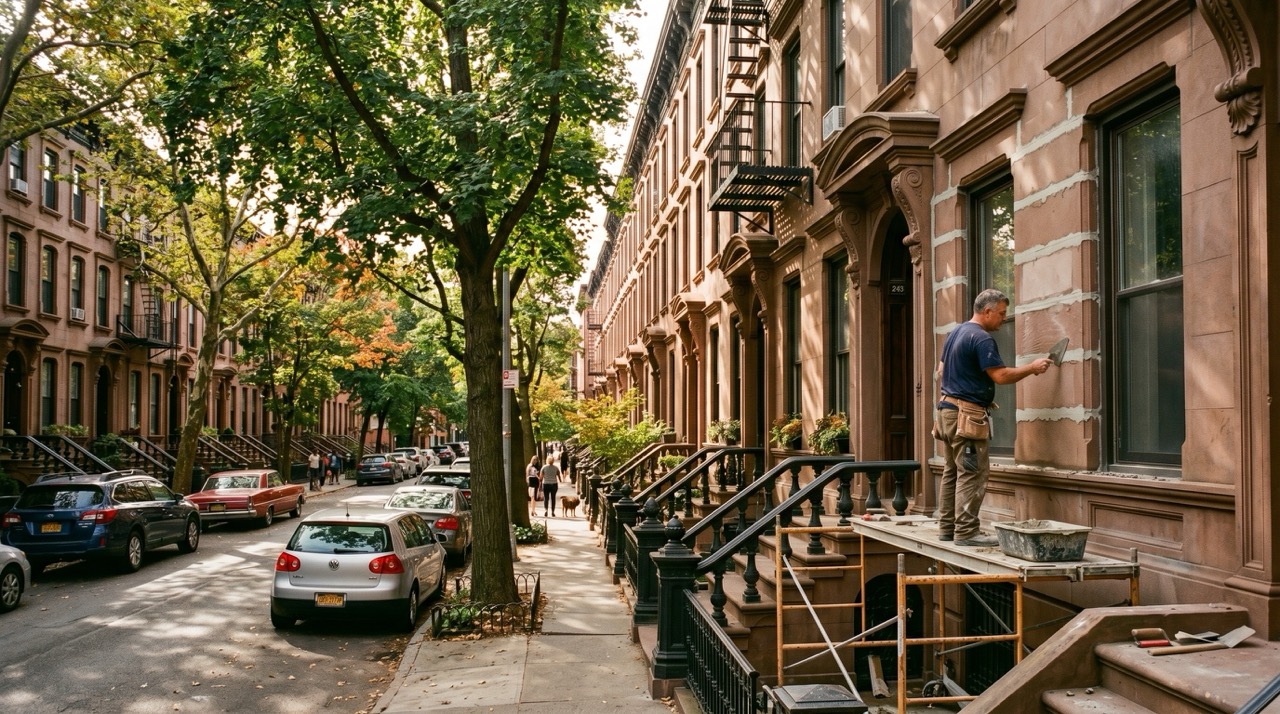
Brownstone neighborhoods (Park Slope, Carroll Gardens, Brooklyn Heights, Prospect Heights, Fort Greene) — The iconic brownstone rowhouses of Brooklyn’s historic neighborhoods are single-family and two-family structures, often outside the LL11 six-story threshold. But many have been converted to multi-unit buildings, and the neighborhoods contain larger apartment buildings with similar brownstone and brick construction that do fall under FISP. The primary deficiency in these areas is brownstone deterioration: sugaring surfaces, horizontal joint cracking, and stoop and areaway problems.
Crown Heights and Prospect-Lefferts Gardens — Dense stock of 1920s-1930s brick apartment buildings, many six stories and tall enough to trigger FISP. These buildings typically show mortar joint deterioration, lintel corrosion, and parapet conditions from decades of deferred maintenance.
Williamsburg and Greenpoint — A mix of older industrial buildings converted to residential and commercial use, pre-war brick tenements, and newer development. The converted industrial buildings often have facade conditions that don’t fit standard FISP categories and require careful assessment.
Flatbush and Midwood — Large concentrations of 1920s-1940s mid-rise apartment buildings, many in good condition but requiring ongoing FISP cycle compliance. The brick buildings in these areas typically have repointing needs and window perimeter sealant issues.
Sunset Park and Bay Ridge — Brooklyn’s Scandinavian and immigrant neighborhood heritage is reflected in large pre-war apartment buildings requiring ongoing FISP compliance and brick and masonry repair.
LL11 Facade Inspection Services in Brooklyn
We provide complete FISP inspection services for Brooklyn buildings: QEWI inspection of all elevations, close-up access coordination, technical report preparation, and DOB NOW: Safety filing.
Brooklyn’s street configuration — many buildings with limited front-to-rear depth on narrower lots, rear yards that may have separate access requirements, and the mix of row building and freestanding types — creates specific access challenges that we know how to navigate.
Brooklyn Facade Repair Contractors
Brownstone and brick repointing — Brooklyn’s brownstone buildings require careful material selection. Natural brownstone (a brown sandstone) is soft and should be repointed with lime-rich mortar; using modern hard Portland mortar damages the stone itself. We analyze existing mortar and specify compatible replacements.
Brick and mortar repair — The dominant repair need across Brooklyn’s pre-war stock is mortar joint repointing and brick repair. We repoint with mortar matched to the existing brick type and color.
Terra cotta repair — Many Crown Heights and Flatbush buildings feature terra cotta ornament at cornices and belt courses. We handle tie-back anchoring and unit replacement for failing terra cotta.
Lintel replacement — Steel lintels in Brooklyn’s pre-war buildings corrode in the same pattern as Manhattan buildings. We replace failed lintels and reset brick above.
Parapet and coping repair — Brooklyn’s 1920s-30s apartment buildings commonly have failing parapet conditions that generate UNSAFE designations.
Waterproofing and sealant — Window perimeter sealant replacement and penetrating water repellent treatment for Brooklyn brick facades.
DOB Violation Remediation in Brooklyn
Brooklyn has a significant backlog of buildings with outstanding FISP violations from prior cycles. Many are owned by individual landlords, small property management companies, or co-ops that may not have had access to expert guidance on the compliance process. We help Brooklyn building owners understand their violation status, develop a remediation plan, and complete repairs and DOB clearance filing efficiently.
For UNSAFE designations in Brooklyn, we respond immediately — placing sidewalk protection within the 24-hour requirement and mobilizing repair crews as quickly as scope can be defined.
Brooklyn Historic District and Landmark Buildings
Brooklyn contains significant concentrations of Landmarks Preservation Commission-designated buildings and historic districts: the Park Slope Historic District, the Brooklyn Heights Historic District, the Crown Heights North Historic Districts, and others. Work on these buildings requires LPC review and approval.
We have experience with LPC coordination for Brooklyn’s historic districts and prepare Certificate of Appropriateness applications as part of our engagement on designated properties.
Service Area Within Brooklyn
We serve all Brooklyn neighborhoods including: Park Slope, Prospect Heights, Crown Heights, Flatbush, Midwood, Williamsburg, Greenpoint, Bushwick, East New York, Bed-Stuy (Bedford-Stuyvesant), Fort Greene, Clinton Hill, Carroll Gardens, Red Hook, Sunset Park, Bay Ridge, Borough Park, Sheepshead Bay, Brighton Beach, Coney Island, and Downtown Brooklyn.
Request a Free Quote — Brooklyn Facade Repairs
Call (917) 540-6852 or use the contact form below. We serve Brooklyn buildings across all neighborhoods and building types.
Frequently Asked Questions — Brooklyn LL11 Facade Repairs
Does Local Law 11 apply to brownstone rowhouses in Brooklyn? Most Brooklyn brownstones are four to five stories tall, which places them below the six-story threshold for FISP requirements. However, buildings that are six or more stories above grade — including many converted rowhouses and larger apartment buildings — are subject to FISP. If you’re unsure whether your building is covered, check your building’s designation in DOB BIS or contact us for clarification.
Is brownstone repair different from brick repair? Yes, significantly. Brownstone is a brown sandstone that is much softer than the brick used on most NYC buildings. Repointing brownstone requires a very soft, lime-rich mortar — using modern cement mortar on brownstone damages the stone face. Brownstone also has specific deterioration patterns (sugaring, horizontal layer separation) that require specific treatment approaches.
My building in Crown Heights has an outstanding SWARMP designation from Cycle 7. What do I need to do? Outstanding SWARMP designations from prior cycles accumulate civil penalties and complicate FISP compliance for subsequent cycles. You need to complete the required repairs and file an amended FISP report to update the building’s status. Contact us — we can help you understand the specific filing requirements and develop a remediation plan.
Are there specific neighborhoods in Brooklyn where DOB facade violations are most common? Buildings from the 1920s-1940s across Flatbush, Crown Heights, Prospect-Lefferts Gardens, and Bed-Stuy have high rates of FISP violations, largely reflecting deferred maintenance from periods when these buildings received less investment. We work extensively in these neighborhoods.
Can LL11 Facade Repairs Contractor NYC work on a building where there’s a co-op board and a managing agent involved? Yes. Many of our Brooklyn projects involve co-op boards, managing agents, and building engineers working together. We communicate clearly with all parties, provide documentation appropriate for board presentations, and work within the approval processes that co-op and condo boards require.